This question shows up more often than you would think. Usually right when someone is halfway through a shed roof, or staring at a low slope garage thinking this should be simpler than it feels. Rolled roofing already looks basic, almost old school, so the idea of adding drip edge feels optional to many people. Sometimes it is. Sometimes skipping it comes back later, quietly, with water stains.
Rolled roofing sits in a strange middle ground. Not quite shingles, not quite flat roofing, and the rules around it feel fuzzy.
What rolled roofing actually is, in practical terms
Roll roofing is usually restricted to a lightweight mat compared to shingles, as it must be rolled for shipment. Rolls are typically 36 inches (91 cm) by 33 feet (10 m) in size. Due to its light weight compared to shingles, roll roofing is regarded as an inexpensive, temporary material. Its broad width makes it vulnerable to temperature-induced shrinkage and tearing as it expands and contracts.
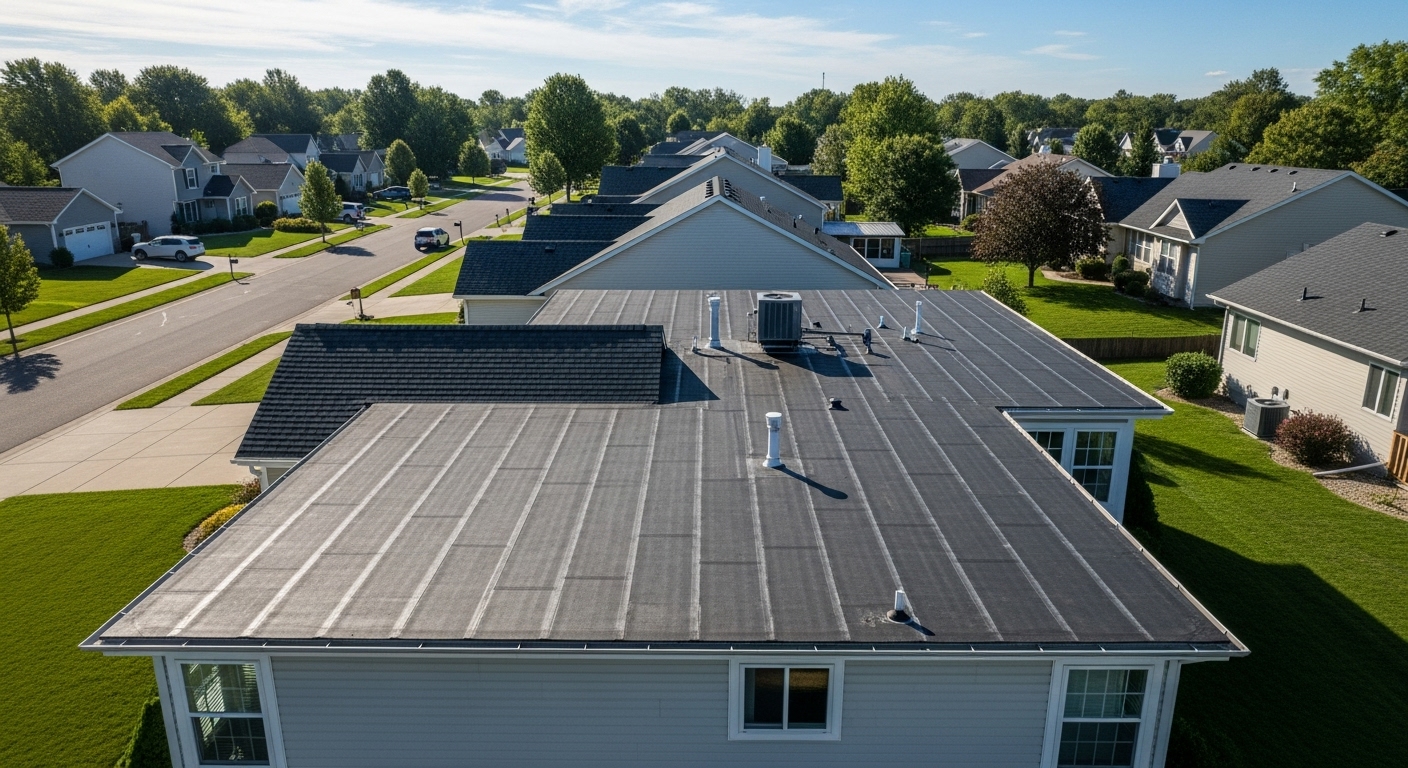
Rolled roofing is an asphalt based roofing material sold in long rolls, usually around 36 inches wide. It is commonly used on low slope roofs, sheds, workshops, porches, and garages. The appeal is simple. Fewer seams, faster install, lower upfront cost. No fancy layering patterns.
But because it is thinner than shingles and often installed on roofs with limited slope, water control becomes more critical, not less. That detail matters more than the material label.
What drip edge is meant to do
Rolled roofing, also known as MSR (mineral-surfaced roll roofing), is a type of roofing material that comes in large rolls rather than individual shingles. It’s made from the same materials as asphalt shingles—fiberglass or organic felt with an asphalt coating—but is manufactured in long sheets, typically 36 inches wide and 33 to 100 feet long.
This roofing material is relatively easy to install and is applied in overlapping layers secured with nails or roofing cement. It’s most commonly used on low-slope roofs, sheds, garages, workshops, and other outbuildings.
https://roofer.com/rolled-roofing-complete-guide/
Drip edge is metal flashing installed along roof edges. Its job is basic but important. It directs water away from the roof deck and fascia, prevents capillary action from pulling water back under the roofing, and protects the edge of the decking from rot.
On shingle roofs, drip edge is standard practice now in most areas. On rolled roofing, the rules feel less clear because older installs often skipped it entirely.
Is drip edge required with rolled roofing?
In many cases, yes, drip edge is still recommended with rolled roofing. Some building codes explicitly require drip edge on all asphalt based roofing systems, including roll roofing. Others are less specific, but still reference edge protection requirements.
Even where not strictly required, manufacturers often recommend drip edge as part of a proper installation. Skipping it does not usually void the material immediately, but it can shorten the roof’s life in ways that do not show up right away.
Where drip edge matters the most
Drip edge becomes more important on rolled roofing in certain situations.
Low slope roofs where water drains slowly
Roofs with exposed fascia boards
Decking edges made of OSB or plywood
Areas with frequent wind driven rain
On these roofs, water tends to linger. Without drip edge, moisture can curl back under the roofing edge and soak the deck. Rolled roofing does not have the thickness or layered overlap that shingles rely on to forgive mistakes.
Eaves versus rakes, the difference matters
At the eaves, drip edge is almost always a good idea. This is where water exits the roof, and where damage usually begins. At the rakes, the need depends on exposure and wind conditions. In open areas or taller structures, drip edge at rakes helps prevent uplift and edge peeling.
Many installers will use drip edge on eaves and skip rakes to save cost. It works sometimes. It also fails sometimes. The savings are small compared to repairs later.
Installation order with rolled roofing
This part causes confusion. At the eaves, drip edge typically goes over the underlayment but under the rolled roofing. At the rakes, drip edge often goes over the roofing material itself. That overlap helps shed water outward.
Rolled roofing manufacturers usually specify cementing the roofing edge down firmly to the metal. That step is often rushed or skipped, and that is where problems start.
What happens if you skip drip edge entirely
Some rolled roofs survive without drip edge for years, especially on sheds with wide overhangs. Others start failing much sooner. Common issues include edge curling, softened decking edges, fascia rot, and staining under the roofline.
These failures rarely show up dramatically. They show up slowly, as swelling wood and peeling asphalt that people ignore until replacement becomes unavoidable.
Cost difference, surprisingly small
Drip edge is not expensive. Material costs are usually minor compared to the roofing itself. Labor impact is also limited, especially during new installation. The real cost difference between using drip edge and skipping it is often less than the price of replacing one sheet of rotten decking later.
That math favors prevention, even on low budget builds.
When skipping drip edge might still happen
There are situations where drip edge is sometimes skipped without immediate disaster. Temporary structures, very low exposure sheds, roofs with thick perimeter trim that already acts as a deflector. Even then, it is more of a compromise than a best practice.
Calling it unnecessary is usually a stretch.
Final thoughts from a cautious editor
Rolled roofing already lives closer to the edge of performance than most modern systems. That does not make it bad, it just means details matter more. Drip edge is one of those quiet details that does not look impressive but does real work every time it rains.
Using drip edge with rolled roofing is rarely wrong. Skipping it is rarely a win. The roof does not care about shortcuts, and water never forgets where it was allowed to go.