The short answer is yes, mostly. The longer answer gets messy fast. Synthetic slate shingles live in that uncomfortable middle ground where expectations are high, marketing is loud, and real world performance depends on things most brochures avoid mentioning. Homeowners hear words like lightweight, durable, and long lasting, then assume it behaves like natural slate without the drama. Sometimes that is true. Sometimes it is not, and the difference matters.
This is not a material you choose casually. Synthetic slate asks for patience, research, and a bit of skepticism.
What synthetic slate shingles actually are
Synthetic slate shingles are manufactured roofing tiles designed to mimic the appearance of natural slate. They are usually made from a blend of polymers, rubber, recycled plastics, or engineered composites. Some products include mineral fillers or UV stabilizers to help with color retention and rigidity.
Unlike stone slate, these shingles are molded, not split from rock. That alone changes how they behave on a roof over time. They look similar from the ground, especially from the street, but the material physics are very different.
Synthetic slate shingles are a modern improvement on a construction classic. Made from combinations of plastic and rubber, synthetic slate is designed to mirror the beauty and uniqueness of authentic slate without the expense or installation headaches. And synthetic slate shingles last longer.
https://www.hgtv.com/how-to/home-improvement/the-benefits-of-synthetic-slate-shingles
Durability claims versus real life performance
Most manufacturers rate synthetic slate for 40 to 50 years. On paper, that sounds excellent. In practice, the oldest large scale installations are only a few decades old, so true long term data is still catching up. That does not mean failure is likely, but it does mean projections are doing some heavy lifting.
What is clear is impact resistance. Many synthetic slate shingles carry high impact ratings, often Class 4. That matters in hail prone regions. Natural slate can crack under sharp impact. Synthetic versions flex more and absorb energy better, though they are not indestructible either.
Weight advantages that actually matter
One of the strongest arguments in favor of synthetic slate is weight. Natural slate roofs can weigh between 800 and 1500 pounds per square. Synthetic slate often weighs 200 to 350 pounds per square. That difference is not cosmetic. It affects structural requirements.
Many homes cannot support real slate without reinforcement. Synthetic slate avoids that problem entirely. For older homes or retrofits, this alone can make the decision simple.
Installation quality makes or breaks the roof
Synthetic slate is not forgiving of sloppy installation. This point gets glossed over constantly. The material itself is flexible, but improper fastening, poor spacing, or incorrect flashing details can lead to curling, movement, or early failure.
Installers trained on asphalt shingles sometimes underestimate this. Synthetic slate needs precise nailing patterns and temperature considerations. In cold weather, some products stiffen. In extreme heat, expansion becomes a factor. The installer matters as much as the shingle.
Appearance, close up versus curb view
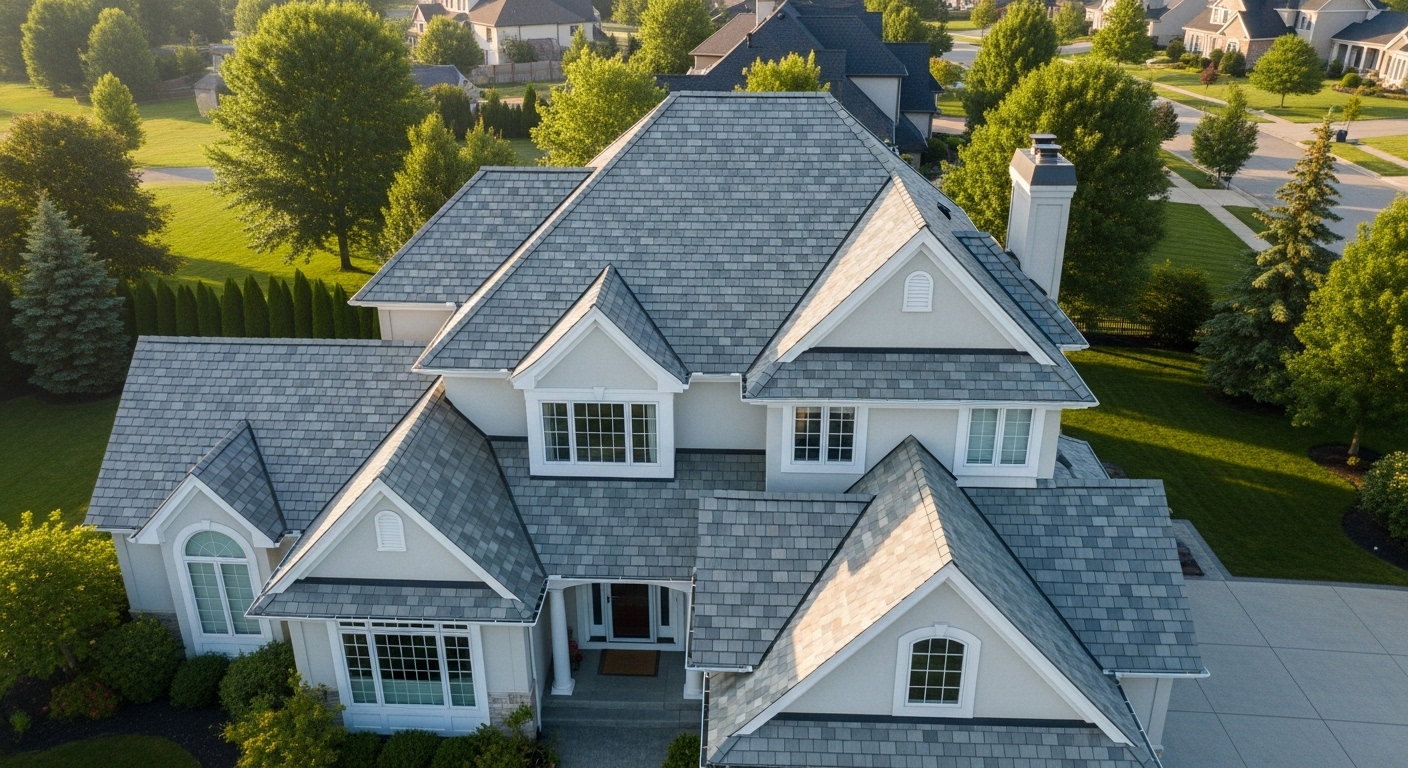
From the street, synthetic slate looks convincing. From ten feet away, some products still look convincing. From two feet away, opinions start to split. Molded textures repeat. Edges can look too clean. Color blends sometimes feel uniform in a way stone never does.
That said, newer generations have improved dramatically. Multi width tiles, varied thickness profiles, and hand finished edges help reduce the artificial feel. It is still not stone, but it is no longer obvious plastic either.
Maintenance expectations are often misunderstood
Synthetic slate requires less maintenance than natural slate, but not zero maintenance. Debris buildup, moss growth, and fastener checks still matter. Some early generation products suffered from UV degradation and surface chalking. Modern formulations handle sunlight better, though no polymer is immune forever.
One advantage is repairability. Individual shingles are easier to replace than stone slate. You do not need specialized slate tools or fear cracking adjacent tiles as much.
Cost comparison, where it lands financially
Synthetic slate typically costs more than architectural asphalt shingles but less than natural slate. Installed pricing often falls between $900 and $1500 per square depending on product and labor rates. That places it firmly in the premium roofing category.
For homeowners comparing lifespan per dollar, synthetic slate can make sense. It costs more upfront, but avoids the structural upgrades and extreme labor costs of stone slate.
Environmental considerations, not always obvious
Many synthetic slate products use recycled materials. That sounds positive, and often is. However, recyclability at end of life is still limited. Unlike stone, which is inert, synthetic materials may end up in landfills after removal.
Longevity helps offset this, but it is worth acknowledging. Sustainability claims vary widely by manufacturer.
Cold weather and heat behavior
In colder climates, synthetic slate generally performs well if installed correctly. Brittleness was an issue with older products, but most current versions handle freeze cycles better. In hot climates, heat expansion becomes the bigger concern. Proper spacing and fastening patterns are not optional details here.
Roof ventilation also plays a role. Poor attic airflow accelerates aging in any roofing system, synthetic slate included.
So are synthetic slate shingles good, or just hyped?
They are good, but not magic. Synthetic slate solves real problems that natural slate creates, mainly weight and cost. It also avoids some of the short lifespan issues of asphalt shingles. What it does not do is turn a careless installation into a long lasting roof, or guarantee timeless beauty from every angle.
For homeowners who want a slate look without structural headaches, and who are willing to pay for skilled installation, synthetic slate can be a smart choice. For those chasing the cheapest upgrade or expecting stone perfection, disappointment usually follows.
The material itself is solid. The outcome depends on how honestly its limits are understood before the first shingle ever touches the roof.