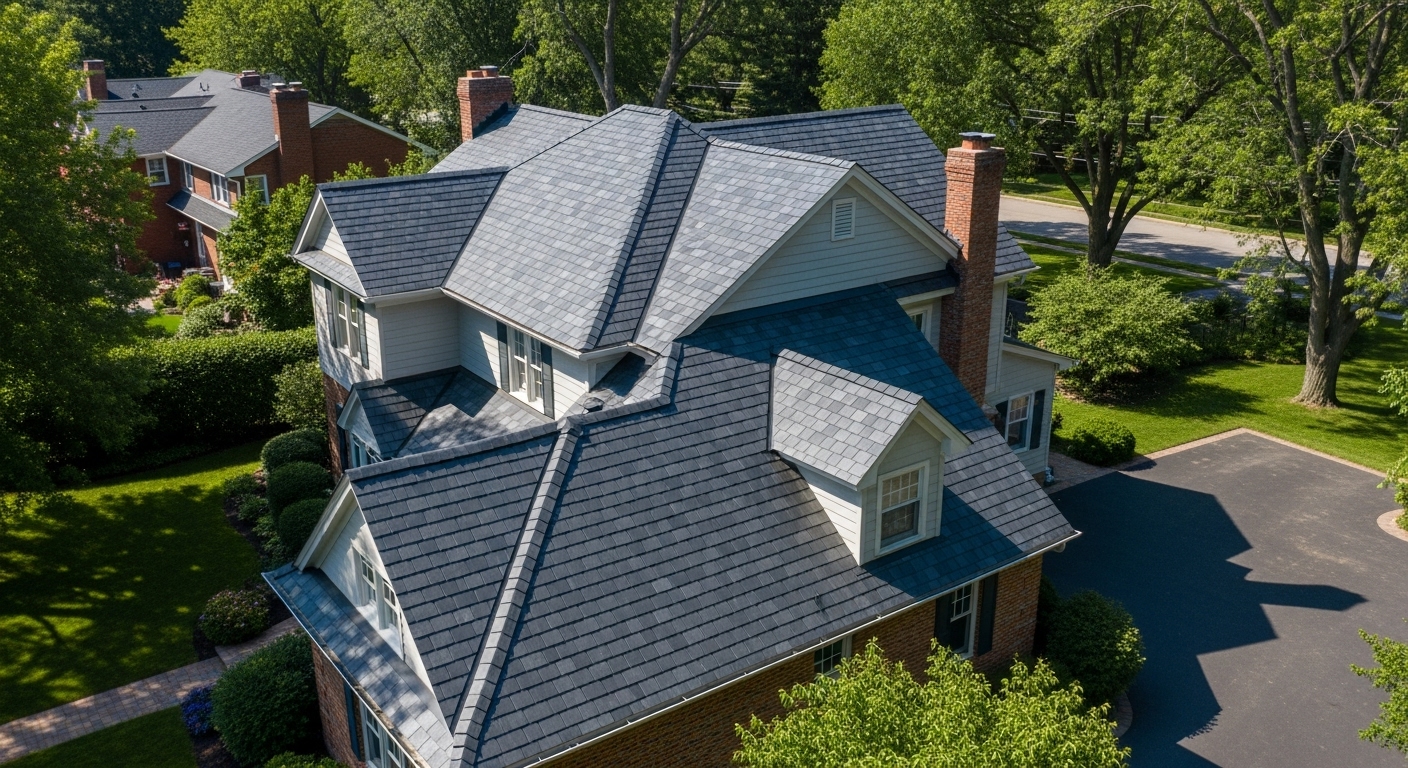
Artificial slate roof tiles, often grouped under composite slates, are made to imitate natural slate without hauling stone out of the ground. They look similar from the street. Sometimes very close. Sometimes not, depending on the manufacturer and the installer’s patience that day.
Most composite slate tiles are produced using a blend of polymers, recycled plastics, rubber, fiberglass, or mineral fillers. The goal is simple enough. Keep the slate look. Drop the weight. Cut installation headaches. Reduce breakage. And hopefully, not create something that feels cheap underfoot.
This category has grown steadily over the last two decades, especially in regions where natural slate costs too much or weighs too much for older framing.
Synthetic slate shingles are a modern improvement on a construction classic. Made from combinations of plastic and rubber, synthetic slate is designed to mirror the beauty and uniqueness of authentic slate without the expense or installation headaches. And synthetic slate shingles last longer.
https://www.hgtv.com/how-to/home-improvement/the-benefits-of-synthetic-slate-shingles
How composite slate tiles are manufactured
Unlike natural slate, which is split along stone layers, artificial slate is molded. That process allows manufacturers to control thickness, texture, and color in a way stone never will. Most composite slates are produced in molds taken from real slate pieces, cracks, grain patterns and all.
Some products mix recycled rubber with plastic polymers. Others lean more toward fiberglass reinforced composites. Each formula behaves slightly differently on the roof. Some flex more. Some feel rigid but lighter than stone. None behave exactly like slate, no matter what brochures suggest.
Weight difference, the big structural relief
Natural slate typically weighs between 800 and 1000 pounds per roofing square. Composite slate usually lands between 250 and 350 pounds per square. That difference matters more than most homeowners realize.
Many existing homes cannot support natural slate without structural reinforcement. Composite slate usually installs on standard framing without upgrades. That alone opens doors for homeowners who like the slate look but not the engineering bill.
Installation process and why roofers care
Composite slate installs more like asphalt shingles than stone slate, though still slower than basic shingles. Tiles are usually nailed rather than hooked. Cutting is easier. Breakage rates are lower. Crews move faster and waste less material.
Labor costs are still higher than asphalt roofing, but noticeably lower than natural slate installs. Roofers also appreciate not worrying about cracked tiles under their boots every five minutes. That reduces job stress, which quietly affects pricing.
Cost range for artificial slate roofing
Artificial slate roof tiles typically cost between $900 and $1400 per roofing square installed. For an average 2000 sq ft home with roughly 24 squares of roof area, total project costs often land between $22000 and $34000.
Material costs alone usually range from $400 to $700 per square. Labor makes up the rest. The final number depends heavily on roof pitch, layout complexity, and regional labor rates. It is not a budget roof. It is a compromise roof, positioned between asphalt and stone.
Lifespan expectations, the marketing vs reality gap
Most composite slate manufacturers advertise lifespans of 40 to 50 years, sometimes longer. Lab testing supports much of this, especially regarding UV resistance and impact performance. Real world data is still catching up, since widespread adoption is relatively recent compared to centuries old slate roofs.
Field inspections suggest well installed composite slate roofs age better than asphalt but not quite as gracefully as natural slate. Color stability varies by brand. Some fade slightly. Others hold surprisingly well. Installation quality plays a larger role than many want to admit.
Impact resistance and storm performance
Composite slates generally outperform natural slate in impact tests. They flex rather than shatter. In hail prone regions, this matters. Many composite slate tiles meet Class 4 impact ratings, which can help with insurance considerations in some areas.
Wind resistance is also strong when installed properly. The lighter weight does not mean weaker performance. In fact, reduced mass sometimes helps during high wind events when fastening systems are correctly followed.
Maintenance expectations over time
Composite slate roofs require less maintenance than natural slate but more awareness than asphalt. Tiles can still crack, especially in extreme temperature swings. Replacement is easier than stone but color matching years later can be tricky if the manufacturer adjusts formulas.
Moss growth, debris accumulation, and flashing issues behave much like any other roof system. The tiles themselves are not immune to aging. They just age differently.
Environmental considerations, better but not perfect
Many composite slate products use recycled materials, which appeals to environmentally minded homeowners. Reduced quarrying also lowers environmental impact compared to stone extraction. On the flip side, these tiles are still manufactured products with energy intensive processes.
They are not biodegradable. End of life disposal remains a question mark in many regions. It is greener than some options, but not spotless.
Where artificial slate makes the most sense
Composite slate fits best where appearance matters, weight is a concern, and budgets allow for a middle ground solution. Historic districts sometimes approve them. Upscale neighborhoods often prefer them over asphalt. Homes with complex rooflines benefit from easier installation and lower breakage.
They are less ideal for rental properties, short term ownership, or homeowners expecting slate longevity at asphalt pricing. That expectation gap causes most disappointment.
Closing thoughts, quietly practical roofing
Artificial slate roof tiles and composite slates exist because natural slate is beautiful but impractical for many homes. These products solve real problems, though imperfectly. They trade permanence for flexibility. Weight for convenience. Stone history for modern manufacturing.
For the right house, they make sense. For the wrong one, they feel expensive and unnecessary. The decision rarely comes down to looks alone. It comes down to structure, climate, budget tolerance, and how long someone plans to stay under that roof.