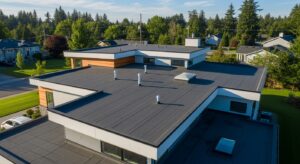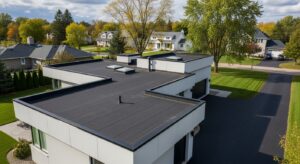
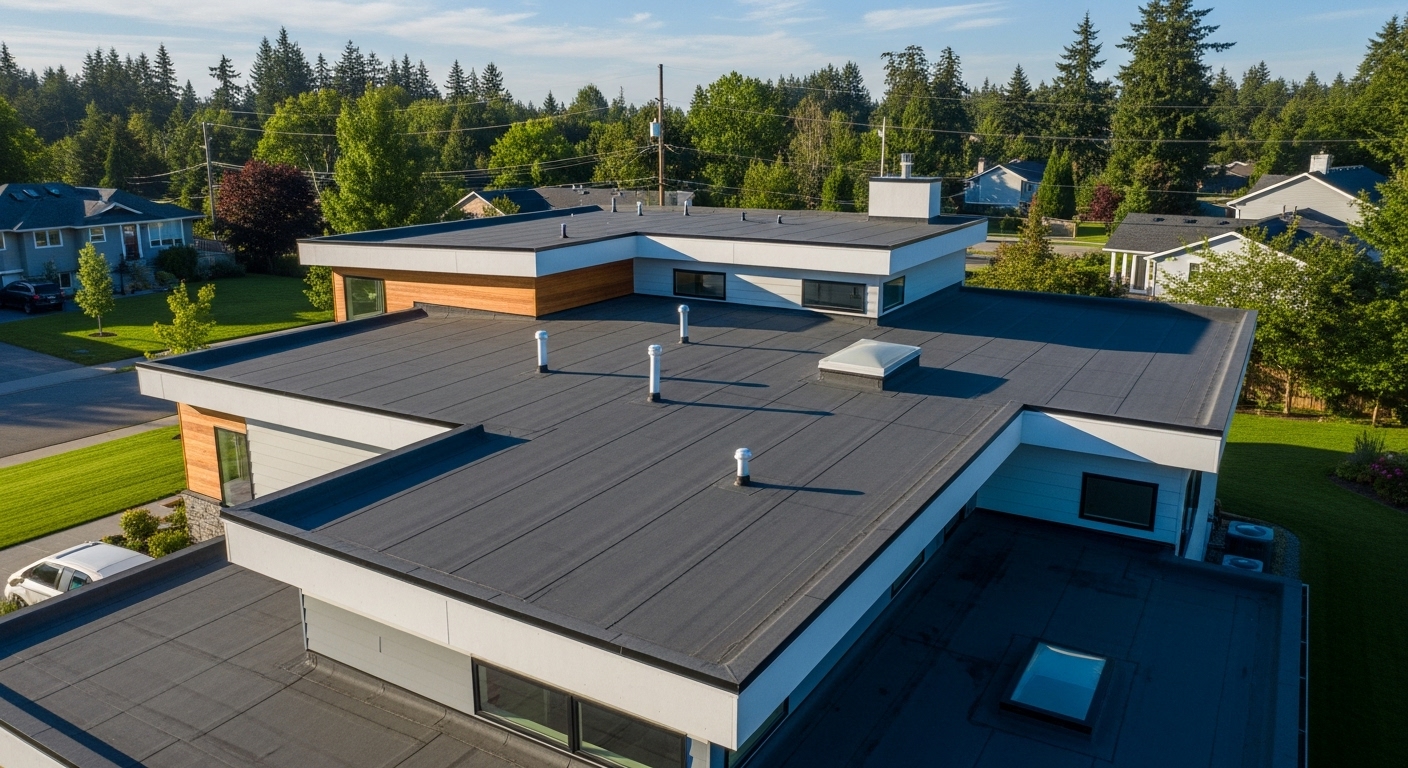
Short answer, yes, it can. Longer answer, it depends, and that word hides a lot of small conditions people skip past when they shouldn’t. EPDM rubber roofing does not demand concrete or steel beneath it. Plywood is acceptable, common even, but only when the plywood behaves itself. And plywood doesn’t always do that.
This question usually comes from homeowners or builders staring at a bare deck, wondering if they need one more layer, one more bill, one more delay. The truth sits somewhere between manufacturer instructions and job site reality.
What EPDM actually needs underneath it
EPDM is flexible, forgiving in some ways, stubborn in others. It wants a flat, clean, dry surface. It does not like movement, sharp edges, or surprise moisture. Plywood can provide a solid base if it is exterior grade, properly fastened, and not already tired from years of leaks or humidity.
Dow’s advanced EPDM technology offers exceptional durability and processability for high-performance applications. As Dow’s premium EPDM offering, NORDEL™ EPDM products are engineered to withstand extreme conditions while supporting or helping enable design flexibility. For more sustainable performance, NORDEL™ REN delivers the same trusted quality with a bio-circular feedstock, helping reduce carbon footprint without compromising functionality.
https://www.dow.com/en-us/product-technology/pt-elastomers-rubber/pg-elastomers-epdm.html
Most EPDM systems are designed to be adhered, mechanically fastened, or ballasted. When directly adhered, the condition of the substrate becomes critical. Adhesive does not hide flaws. It exaggerates them.
Plywood grade matters more than people think
Not all plywood qualifies, even if it looks fine at first glance. Exterior grade plywood with proper glue ratings is the standard. Interior grade plywood can swell, delaminate, or soften over time when trapped moisture shows up, and it usually does. Roofs invite moisture even when installed perfectly.
EPDM elastomers provide excellent resistance to heat, water, steam, ozone and UV light (color stability) while providing very good low temperature flexibility properties. These compounds also withstand the affects of brake fluids, alkali, mild acidic and oxygenated solvent environments. EPDM compounds are not recommended for gasoline, petroleum oil and greases, and hydrocarbon solvent environments.
https://www.mnrubber.com/tools-resources/design-guide/elastomers-materials/ethylene-propylene-diene-monomer/
Thickness matters too. Many installers prefer at least 5 8 inch plywood for roof decks under EPDM. Thinner panels flex more, and that flex transfers stress into seams and adhesive bonds. Over time, small movements turn into visible problems.
Moisture content is the quiet deal breaker
EPDM can be installed over plywood only if the plywood is dry. Not mostly dry. Actually dry. Trapped moisture under a fully adhered membrane has nowhere to go. It can cause bubbles, adhesive failure, and in colder climates, freeze related issues.
Roofing studies have shown that moisture trapped in roof assemblies is one of the leading causes of premature membrane failure. This is not dramatic failure. It is slow, annoying, expensive failure. The kind that shows up years later when nobody remembers the install details.
Do you need a cover board over plywood?
Sometimes yes, sometimes no. Many installers add a cover board like gypsum or high density fiberboard over plywood before installing EPDM. This extra layer smooths imperfections, improves fire ratings, and creates a more stable bonding surface. It also adds cost and labor, which is why people ask this question in the first place.
On small residential or low slope additions, EPDM is often installed directly on plywood without issue when conditions are right. On larger roofs or commercial projects, cover boards are far more common. The difference is risk tolerance, not physics.
Adhesive choice changes everything
EPDM adhesive systems are not one size fits all. Some adhesives bond aggressively to wood. Others perform better over insulation or cover boards. Using the wrong adhesive over plywood can lead to weak bonds or uneven curing.
Temperature and humidity during installation also affect adhesive performance. Cold plywood slows curing. Hot plywood can flash adhesive too quickly. Installers who rush this step usually regret it later.
Seams and fasteners still care about the deck
Even when EPDM is installed correctly, seams and perimeter details rely on the stability of the deck. Loose plywood, missed fasteners, or uneven joints create stress points. Over time, seams work harder in those areas. They stretch, shrink, and eventually complain.
That complaint often looks like edge lifting or seam separation, not a dramatic tear. It starts small. It always does.
Code and warranty considerations
Building codes in many regions allow EPDM over plywood, but manufacturer warranties may impose stricter conditions. Some warranties require specific substrates or cover boards for full coverage. Others allow plywood but limit warranty length.
Skipping required layers can save money upfront and quietly reduce protection later. Homeowners rarely connect those dots until something fails.
When installing directly on plywood makes sense
It makes sense on properly built decks, with exterior grade plywood, correct thickness, tight fastening schedules, and low moisture content. It also helps when roof geometry is simple and drainage is well planned. Standing water stresses any membrane, plywood underneath or not.
It does not make sense on questionable decks, older homes with unknown moisture history, or roofs already showing deflection or soft spots. EPDM is forgiving, but it is not a magician.
Final thoughts, without sugar coating
Yes, EPDM can be installed directly on plywood. It happens every day. It also fails every day when shortcuts pile up quietly. The membrane itself is durable, often lasting 25 to 30 years when installed correctly. The deck underneath determines whether it ever gets the chance.
The smartest approach is not asking if plywood works, but asking whether this plywood works, right now, under these conditions. That question costs nothing to ask and a lot to ignore.