Short answer, yes. Longer answer, yes but you can mess it up badly if you treat it like concrete or a driveway. TPO roofing is tough in its own quiet way, but it is not built for brute force cleaning. People hear “rubber roof” and assume it can take abuse. That assumption costs money later.
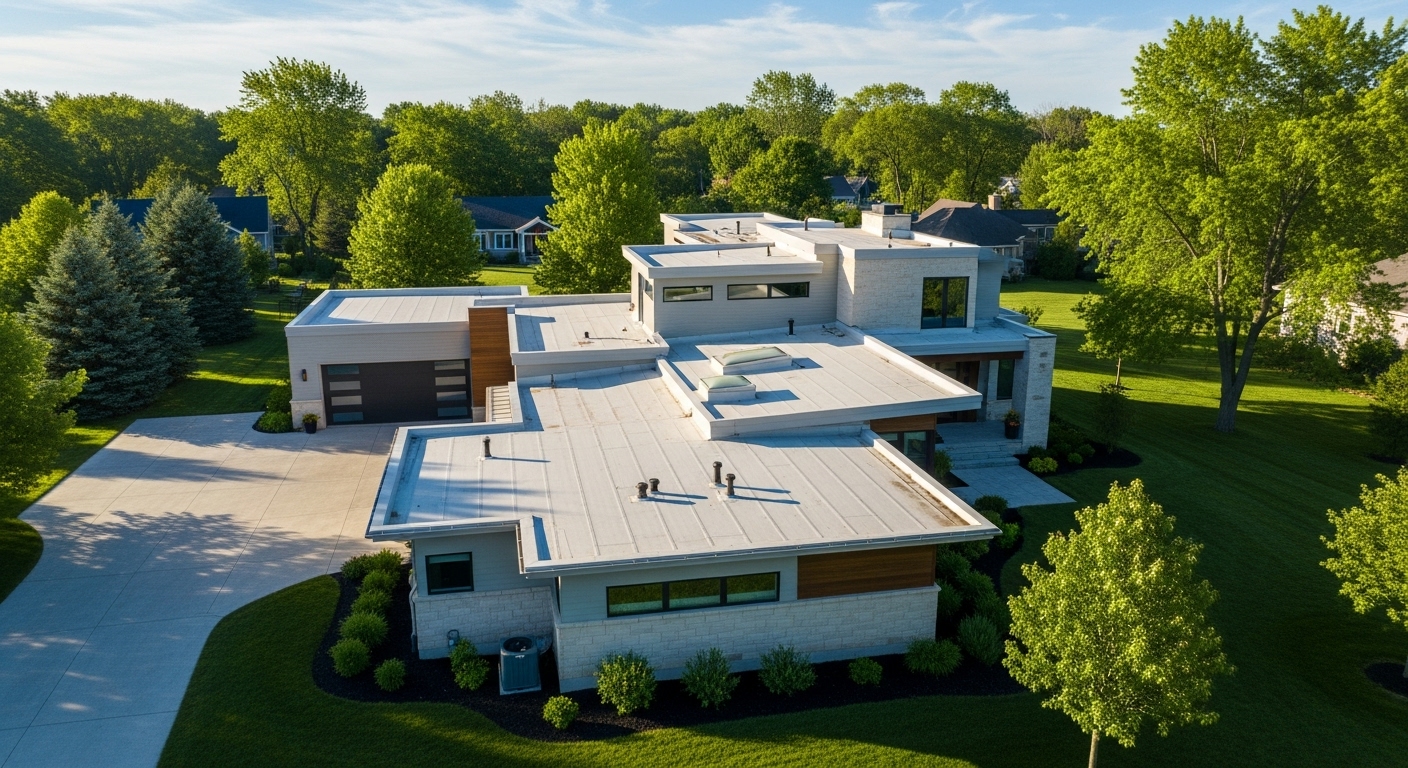
TPO stands for thermoplastic polyolefin. It is a single ply roofing membrane, usually white, heat welded at the seams. Strong against UV, flexible in temperature swings, but still a membrane. Not armor.
What makes TPO roofs different from other flat roofs
TPO roofs are designed to reflect heat, resist chemicals, and stay watertight through welded seams. The surface is smooth, almost chalky when it ages. That top layer is what keeps the roof cool and sealed. Once it is damaged, the roof still looks fine from far away, but it slowly starts failing.
Unlike modified bitumen or built up roofs, TPO does not like abrasion. Scrubbing too hard or blasting with high pressure can strip that protective layer. It does not tear instantly. It weakens quietly.
Why people want to power wash them in the first place
Most TPO roofs turn gray over time. Dirt, pollen, algae streaks, HVAC runoff, bird mess. It looks ugly, especially on commercial buildings where the roof is visible from taller neighbors. Facility managers get complaints. Homeowners with flat additions get annoyed every time they look up.
Power washing feels like the obvious fix. Fast, dramatic, satisfying. Water goes in, dirt goes away. Except roofs are not sidewalks.
Safe pressure levels for washing a TPO roof
If power washing is done, pressure matters more than almost anything else. Most manufacturers recommend staying below 2000 PSI, and many professionals stay closer to 1000 to 1500 PSI just to be cautious. Wide fan tips only. Never a narrow jet.
The wand should stay angled, not pointed straight down at seams. Seams are heat welded, strong, but concentrated pressure can still lift edges over time. One cleaning rarely causes failure. Repeated aggressive cleanings do.
Water temperature also plays a role
Cold water is generally safer. Hot water can soften the membrane slightly, especially in warm weather. Combine heat with pressure and friction, and you start accelerating surface wear. It does not look dramatic in the moment. Months later is when leaks start showing up.
Cleaning chemicals, another quiet risk
Bleach is often used by people trying to kill algae. That is a mistake on TPO. Harsh chemicals can degrade the membrane surface and void warranties. Most approved cleaners are mild detergents or manufacturer approved roof wash solutions.
Even dish soap diluted heavily is often safer than random outdoor cleaners. Always rinse thoroughly. Chemical residue left behind attracts dirt faster later.
When power washing is a bad idea altogether
Older TPO roofs that are already brittle should not be power washed. If the surface looks cracked, heavily chalked, or thin in spots, pressure washing can speed up failure. Roofs with known seam repairs or patches also deserve gentler treatment.
If the roof already leaks, washing it will not fix anything. It just pushes water into places it already wants to go.
Better alternatives to aggressive washing
Soft washing is often the better route. Lower pressure, longer dwell time with mild cleaners, gentle rinsing. It takes longer. It looks less dramatic while happening. It preserves the membrane.
In some cases, simple rinsing with a garden hose and soft broom does enough. Not everything needs industrial force.
Warranty considerations people forget
Many TPO manufacturers have specific maintenance guidelines. Using improper pressure or chemicals can void coverage without much argument. That paperwork matters years later when a seam fails and a claim gets denied. Cleaning seems harmless until it becomes expensive.
Final thoughts
Yes, you can power wash a TPO roof. You just cannot treat it like concrete, brick, or asphalt. Pressure must stay controlled. Chemicals must stay mild. Technique matters more than equipment.
Most damage does not happen instantly. It happens slowly, one overly aggressive cleaning at a time. A clean roof that fails early is not a win. A slightly dirty roof that lasts its full lifespan usually is.