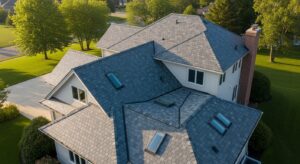
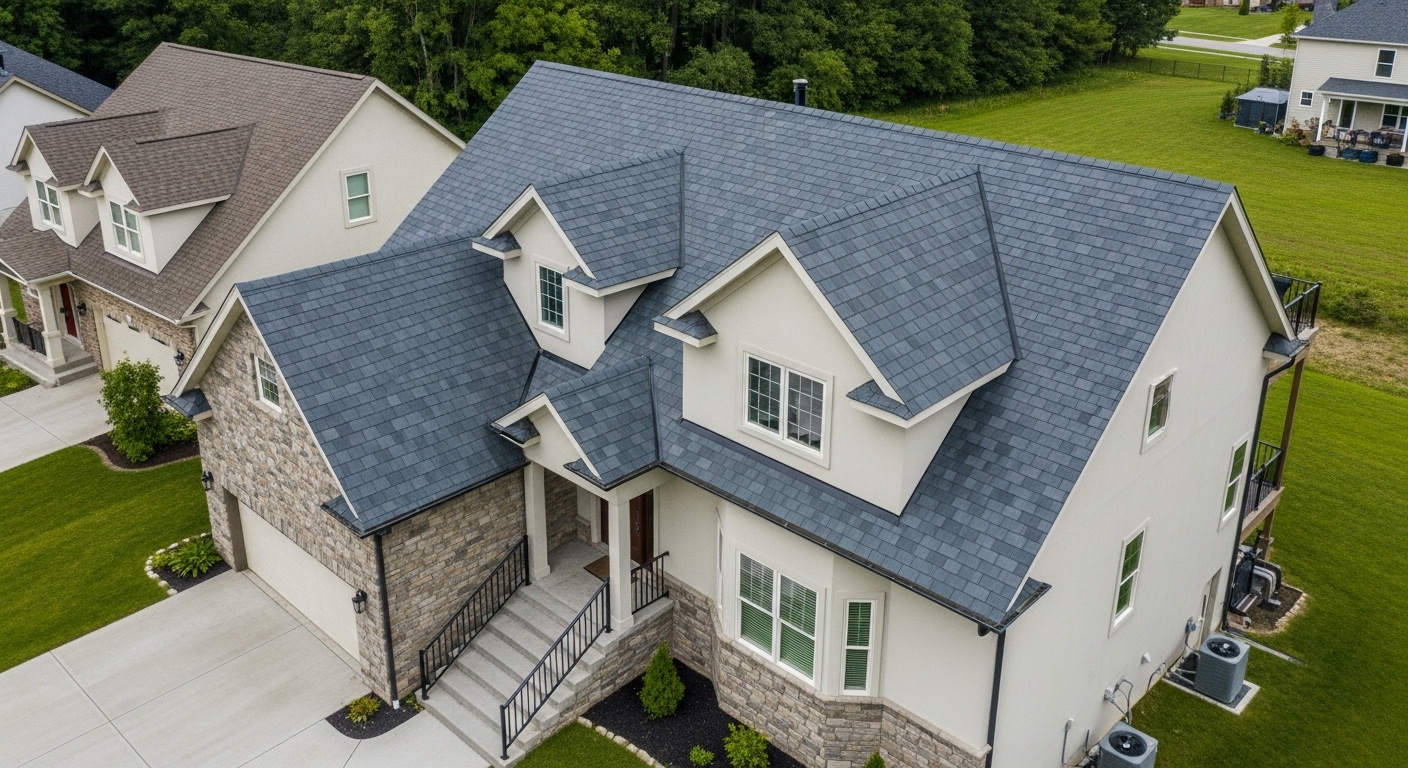
Composite cement roofing sits in that strange middle space. Not flashy like metal, not familiar like asphalt, not ancient like clay tile. People hear the word cement and assume strength, permanence, something that laughs at storms. That assumption is partly right. Partly not. The truth lives somewhere in between, and it deserves a slower look than the sales brochure version.
Composite cement roofing is often marketed as durable, fire resistant, and long lasting. All of that can be true. But good for roofs is a bigger question than it sounds.
What composite cement roofing actually is
Composition roofs are made up of shingles created from a combination of materials that typically include fiberglass, asphalt, and granules. The fiberglass serves as the foundation while the asphalt coating provides water resistance. The granules help protect your roof from UV rays and give it color. The shingles sometimes also contain technologies that help protect the roof against blue-green algae discoloration. It’s one of the most affordable roof options and allows owners to choose from a broad range of styles and colors.
https://www.gaf.com/en-us/blog/your-home/what-is-a-composition-roof-281474980190283
Composite cement roofing is usually made from a blend of cement, sand, cellulose fibers, and sometimes additives for flexibility and water resistance. The result is a manufactured roofing product that can be shaped to look like slate, wood shake, or tile. It is not poured concrete, and it is not plain fiber cement siding either, though the materials overlap.
Most systems come as individual shingles or tiles, installed piece by piece like traditional roofing. The weight and rigidity are noticeably higher than asphalt, which changes how the roof behaves long term.
Durability claims and what they mean in real weather
One of the strongest selling points is durability. Composite cement roofs often carry manufacturer ratings of 40 to 50 years. That is not imaginary. Cement based products resist rot, insects, and fire far better than organic materials. They do not curl like asphalt or crack like brittle clay when installed correctly.
In hail prone regions, composite cement often performs better than standard asphalt shingles. Industry impact tests show many fiber cement roofing products achieving Class 3 or Class 4 impact ratings. That matters for insurance in some areas, and it matters for peace of mind during loud storms at night.
Weight, the first practical concern people ignore
Composite cement is heavy. Much heavier than asphalt. A typical asphalt roof weighs roughly 200 to 300 pounds per square. Composite cement roofing can weigh 700 to over 1000 pounds per square depending on profile and thickness.
This weight is not automatically a problem, but it can be one. Older homes or homes not originally designed for tile style roofs may need structural reinforcement. That adds cost and complexity. Skipping this evaluation is how problems show up years later, quietly, as sagging or stress cracks.
Installation quality matters more than material strength
A strong material installed poorly still fails. Composite cement roofing requires precise fastening, correct spacing, and proper underlayment. Unlike asphalt, mistakes do not forgive easily. Cracked tiles during install are common if crews rush or lack experience.
Labor costs are higher for this reason. Fewer installers specialize in composite cement roofing, and the ones who do usually charge accordingly. A bad install can cancel out all the durability benefits people paid for.
Cost comparison with other roofing options
Composite cement roofing is not cheap. Installed costs often range from $900 to $1400 per square depending on region and complexity. That places it well above asphalt and often comparable to metal or clay tile.
For a typical 2000 sq ft house, total project costs can easily land between $18000 and $30000. That number surprises many homeowners who expected something closer to mid range pricing. The long lifespan helps justify it, but the upfront hit is real.
Maintenance expectations over time
Maintenance is relatively low but not zero. Composite cement does not rot, but it can absorb moisture if protective coatings wear down. Moss and algae growth can still occur in humid climates. Periodic inspections and gentle cleaning extend its life.
Cracked tiles should be replaced quickly. Unlike asphalt, damage is localized, but ignoring it allows water intrusion underneath rigid materials, which is never kind to wood decking.
Climate suitability, where it shines and where it struggles
Composite cement performs well in fire prone regions, hot climates, and areas with heavy sun exposure. UV resistance is excellent compared to asphalt. In freeze thaw climates, quality products handle expansion better than natural stone, but cheap versions may crack if water infiltration occurs.
Coastal areas require extra attention. Salt air does not harm cement directly, but metal fasteners must be corrosion resistant or failure happens faster than expected.
Aesthetic appeal and resale perception
Visually, composite cement roofing offers strong curb appeal. Slate look profiles and wood shake styles often boost perceived home value. Buyers tend to associate cement based roofing with premium construction, even if they do not fully understand the material.
That said, some buyers are cautious about weight and repair costs. It does not scare everyone, but it does spark questions during inspections.
So, is composite cement good for roofs, honestly
Yes, composite cement can be very good for roofs when the house structure supports it, the installer knows the material, and the budget allows for proper execution. It offers long life, fire resistance, and strong weather performance. It is not a shortcut, and it is not forgiving.
For homeowners expecting asphalt pricing with cement strength, disappointment comes fast. For those planning long term ownership and willing to invest upfront, composite cement roofing often proves its value quietly, year after year, without much drama. That kind of reliability rarely comes cheap, and it rarely comes without trade offs.