
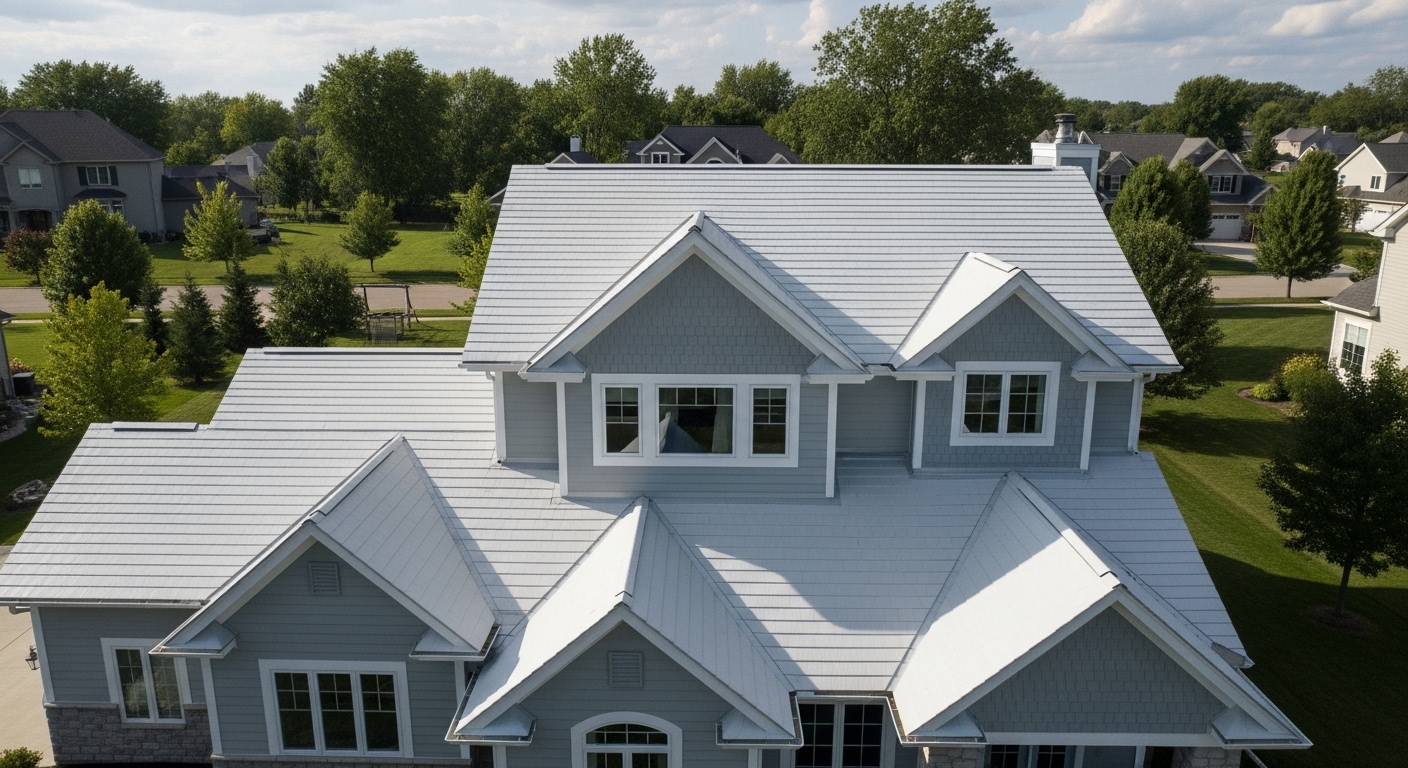
This question keeps popping up, usually after someone hears a neighbor brag about a flat white roof that reflects heat like a mirror. Or a contractor casually mentions TPO as if it’s the obvious next step. But better is a slippery word. Better for what. Better for whom. Better in which climate, budget, or building shape. Once you slow down, the comparison gets less dramatic and more practical, almost boring in places, which is usually where the truth hides.
What TPO actually is, stripped of the sales talk
TPO stands for thermoplastic polyolefin. It is a single ply roofing membrane, usually white, sometimes light gray. Heat welded seams, rolled out in wide sheets, fastened or adhered to flat or low slope roofs. It became popular in the US in the early 2000s, partly because older membranes had issues and the industry wanted something new, something cleaner.
TPO is common on commercial buildings, warehouses, apartment complexes, and increasingly on modern flat roof homes. It is not designed for steep slopes. That part matters more than people admit.
What asphalt shingles still do very well
Asphalt shingles are an American invention by Henry Reynolds of Grand Rapids, Michigan. They were first used in 1903, in general use in parts of the United States by 1911 and by 1939 11 million squares (100 million square meters) of shingles were being produced. A U.S. National Board of Fire Underwriters campaign to eliminate the use of wood shingles on roofs was a contributing factor in the growth in popularity of asphalt shingles during the 1920s. The forerunner of these shingles was first developed in 1893 and called asphalt prepared roofing, which was similar to asphalt roll roofing without the surface granules. In 1897 slate granules were added to the surface to make the material more durable. Types of granules tested have included mica, oyster shells, slate, dolomite, fly-ash, silica and clay. In 1901 this material was first cut into strips for use as one-tab and multi-tab shingles.
Asphalt shingles have been around for over a century in various forms. The modern fiberglass asphalt shingle dominates residential roofing for a reason. It works on slopes. It sheds water naturally. It is forgiving during installation, which sounds minor but is not. Shingles tolerate small mistakes better than membranes do.
Architectural shingles today last longer than older three tab products. Many manufacturers rate them for 30 to 50 years, though real world lifespan often lands lower, closer to 20 to 30 years depending on climate and ventilation. Still respectable.
Cost comparison, where opinions start to harden
For most homes, shingles are cheaper upfront. Installed asphalt shingles often cost between $350 and $550 per roofing square. TPO roofing, installed properly, usually falls between $550 and $900 per square, sometimes more. The price gap widens on smaller projects because TPO crews, equipment, and setup costs do not scale down nicely.
On a typical sloped residential roof, shingles almost always win on price. On a flat roof, shingles are not even an option, so the comparison ends early.
Lifespan expectations, not brochure promises
TPO manufacturers often advertise 20 to 30 year lifespans. In practice, performance varies heavily by installation quality. Heat welded seams must be done correctly. Improper welds fail early. Foot traffic damage is common. Punctures happen.
Asphalt shingles age differently. They lose granules, dry out, crack, curl. You can see their decline coming years in advance. TPO failures can be quieter, hidden until leaks appear.
Neither system is immortal. They just fail in different moods.
Energy efficiency, the part people exaggerate
TPO roofs are reflective. White membranes reduce heat absorption. In hot climates, this can reduce cooling loads. Studies have shown roof surface temperatures on white membranes can be 50 to 60 degrees cooler than dark roofs under direct sun. That is real.
But the effect on actual energy bills depends on insulation, attic design, and HVAC efficiency. Shingles can also be paired with better ventilation and insulation strategies that narrow the gap. The savings are not magic, despite how it gets pitched.
Maintenance differences, small but annoying
TPO roofs require regular inspection. Seams, penetrations, drains, and flashing need to be checked. Leaves and debris must be cleared. Small punctures should be patched quickly.
Shingle roofs need less active maintenance. Occasional inspections, replacing damaged shingles after storms, clearing gutters. Less technical, more forgiving. Homeowners tend to prefer systems that do not demand attention until they really must.
Installation skill matters more with TPO
A poorly installed shingle roof can still function decently for years. A poorly installed TPO roof can fail fast. This is not a knock on the material, it is just reality. Heat welding is not forgiving. Details around edges and penetrations matter greatly.
This is why many residential contractors still hesitate to recommend TPO for homes unless the roof design truly calls for it.
Climate considerations people forget to mention
TPO performs well in hot climates. It also handles cold reasonably well, but extreme freeze thaw cycles can stress seams. Asphalt shingles crack in cold, soften in heat, and suffer in hail prone regions. No roof type loves hail.
In snowy regions, sloped shingle roofs shed snow better. Flat TPO roofs hold snow load longer, which the structure must be designed to handle.
So, is TPO better than shingles?
Not universally. TPO is better for flat or low slope roofs. It is better when reflectivity is a priority. It is better in commercial style designs where drainage and membrane systems make sense.
Asphalt shingles are better for pitched residential roofs. They are cheaper upfront, easier to repair, widely supported by contractors, and visually accepted in most neighborhoods.
The better roof is the one that matches the building, the climate, and the budget without forcing a trend where it doesn’t belong.
Final thoughts
Roofing decisions go wrong when people chase materials instead of fit. TPO is not a modern upgrade to shingles. Shingles are not outdated because membranes exist. They solve different problems.
If your roof is flat, shingles are out of the conversation entirely. If your roof has slope, shingles remain one of the most balanced choices available. Better is not about newer or whiter or louder. Better is about appropriate, and that answer changes from house to house, sometimes even from one side of the street to the other.