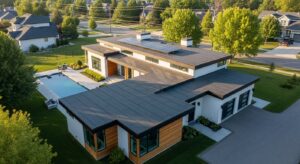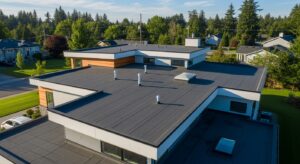

EPDM roofing has been around long enough that most roofers stop explaining it unless you ask twice. Rubber roof, single ply, rolls out wide, seams glued or taped, end of story. But the color choice, white versus black, changes more than people expect. Not marketing fluff changes. Real world, heat on the deck, energy behavior, aging patterns, and even repair habits shift depending on which color ends up on the roof.
This comparison is not about which looks better. Flat roofs rarely win beauty contests anyway. This is about performance, cost behavior, and what actually happens after year five when nobody is thinking about the install anymore.
What EPDM roofing really is, before color enters the room
EPDM stands for ethylene propylene diene monomer. That sounds chemical because it is. In practical terms, EPDM is a synthetic rubber membrane used mostly on low slope and flat roofs. It handles temperature swings well, stretches without tearing, and shrugs off UV exposure better than many alternatives.
White EPDM roofing membranes are made by adding titanium dioxide to the rubber compound. This additive makes the membrane white and, more importantly, helps it reflect UV rays. The reflective properties of white EPDM help reduce heat absorption, keeping buildings cooler.
https://mcclellandsroofing.com/blogs/white-epdm-roofing-vs-black-epdm/
Industry field data over decades shows properly installed EPDM roofs often last 25 to 30 years, sometimes longer with basic maintenance. That lifespan holds true for both white and black versions. Color does not magically shorten or extend the membrane itself. What it changes is how the roof behaves day to day.
The fundamental color difference, heat absorption versus reflection
Black EPDM absorbs heat. White EPDM reflects it. That sounds obvious, but the effect is measurable and not subtle.
Surface temperature studies consistently show black EPDM membranes can reach 160 to 180 degrees Fahrenheit under direct summer sun. White EPDM under the same conditions often stays 40 to 60 degrees cooler. That temperature gap affects the building below, the membrane movement, and even how comfortable maintenance crews feel walking on it.
Energy impact, where white EPDM starts pulling ahead
White EPDM roofing reflects a high percentage of solar radiation. This reduces heat transfer into the building. In warm and mixed climates, this can lower cooling demand noticeably. Commercial energy modeling studies often show cooling energy reductions in the range of 5 to 15 percent after switching from dark to reflective roofing systems, depending on insulation and building use.
Black EPDM does the opposite. It absorbs heat and releases it slowly. In colder climates, that heat gain can actually help reduce heating demand slightly during shoulder seasons. The effect is smaller than cooling savings on white roofs, but it exists.
Installation cost differences are smaller than people assume
Material pricing between white and black EPDM is usually close, but white EPDM often costs slightly more. The difference varies by manufacturer and thickness, but white membranes may run 5 to 10 percent higher in material cost.
On a typical flat roof project, labor costs dominate the invoice. That means the total installed price difference between white and black EPDM often ends up being modest. Sometimes a few hundred dollars. Rarely a deal breaker on its own.
Thickness matters more than color, but color still plays a role
EPDM membranes commonly come in 45 mil, 60 mil, and occasionally thicker options. Thicker membranes resist punctures better and tolerate movement longer. A 60 mil black EPDM will usually outperform a thinner white EPDM in abuse resistance.
That said, when thickness is equal, color affects aging patterns. White EPDM tends to experience less thermal cycling stress because it heats and cools more gently. Black EPDM expands and contracts more aggressively due to higher surface temperatures. Over decades, that movement can stress seams if installation quality was mediocre.
Maintenance behavior differs quietly over time
Black EPDM hides dirt well. White EPDM does not. Dust, pollen, and pollution visibly darken white membranes over time. This reduces reflectivity unless the roof is cleaned periodically. Many building owners ignore this, which slowly erodes the energy advantage.
Black EPDM does not lose performance when it gets dirty. It was never reflective to begin with. From a maintenance laziness perspective, black EPDM tolerates neglect better.
Repair visibility and heat comfort on the roof
Leaks happen. When they do, black EPDM repairs are often easier to visually blend. White patches on black roofs stand out immediately, while black patches on white roofs do the same. This is cosmetic, not structural, but it matters to some owners.
Heat comfort during repairs also differs. Technicians working on black EPDM in summer deal with extreme surface heat. White EPDM is far more tolerable underfoot. This does not affect the owner directly, but it influences how crews schedule and perform work.
Climate should influence the decision, not trends
In hot southern climates, white EPDM usually makes more sense. Lower roof temperatures reduce HVAC strain and improve interior comfort. In northern climates with long heating seasons, black EPDM can be perfectly reasonable and sometimes preferable.
Neither option is universally better. The wrong choice is ignoring climate entirely.
Environmental considerations people rarely think about
White EPDM contributes to reduced urban heat island effect by reflecting solar radiation. This is one reason many energy codes and green building programs encourage reflective roofing in dense areas.
Black EPDM, while less reflective, often contains carbon black which improves UV resistance and longevity. That durability can offset environmental impact by extending roof life and reducing replacement frequency.
Final thoughts, written without brand loyalty
White EPDM and black EPDM are the same roof wearing different sunglasses. One bounces sunlight away, the other absorbs it and deals with the consequences. Cost differences exist but are usually secondary. Performance differences show up slowly, year by year, through energy bills, membrane movement, and comfort levels.
The better choice depends less on what is popular and more on where the building sits, how it is used, and how much attention the roof will receive after installation. Color is not cosmetic here. It quietly shapes how the roof lives its life.